
I'm a massive fan of performance data. All my players collect training data to some degree, and I'm sure you do to. It's a critical part of my coaching, and I'd be guessing a LOT without it.
But it's not an oracle. Consider the pic below.
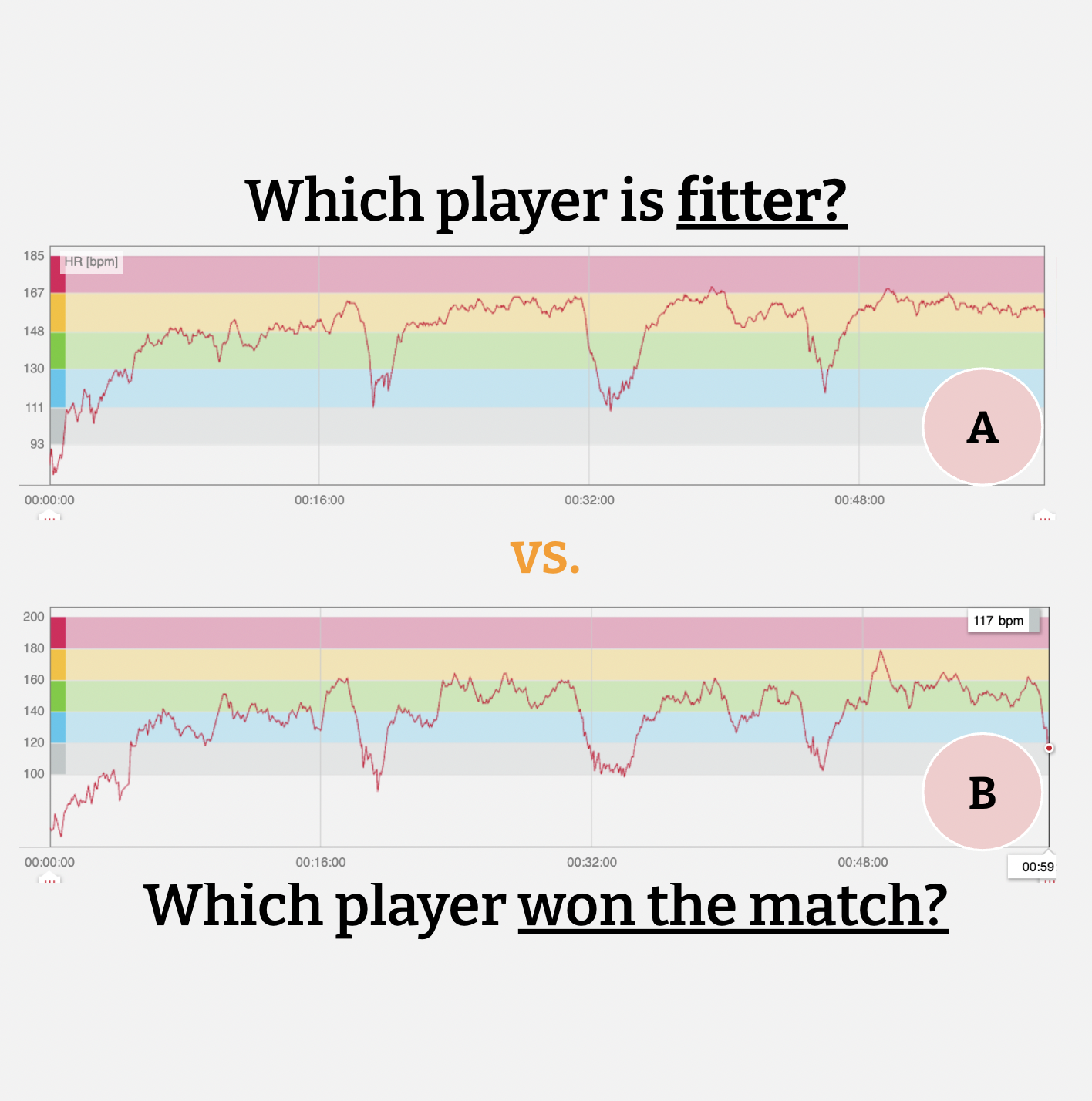
This is matchplay heart rate (HR) data from a couple of my players might be "neat" or "interesting", but for most players (and coaches for that matter), the value stops there.
Here's what you can absolutely understand from this data. Player A worked harder and for longer than Player B. And that's about it. Honestly.
EVERYTHING ELSE IS AN ASSUMPTION.
You cannot tell:
-who won the match
-who is fitter
-who hits better lines
-who volleys more
-who hits more tin
-who makes better decisions
HR data reflects the intensity and duration of training, and is a reliable way to estimate and predict a cardio / match-fitness training effect over time. I also use it as a live measure during sessions so players know how hard to push (or how hard I need to be pushing them) to hit their targets for the day.
So, if you’re a player who needs to improve their conditioning, or you want to make sure you’re not doing too little or too much volume beyond the single-session collection, HR data is a great way to confirm this.
If you want to better understand your training data, or use what you have to play better when it matters the most, click HERE.
Coach Derek