Performance data is far more valuable than many players realize.
For some players, the numbers and charts are fun to look at (bright colours!) but hard to understand.
And for others, they kind-of understand the numbers and trends but don’t know how to use this data to improve their play.
I get it.
So, let's keep it simple. Let's assume you collect your heart rate data and want to juice the value of it.
There are two main things that should matter to you. The single-session data (also known as a “training unit”), and the sum of these sessions over time (viewed in weeks, months, etc.).
Your single-session data helps you determine whether or not you met the objective of that single training session. Simple! If the Monday afternoon session was supposed to focus on improving your conditioning, your data should tell you if this happened...if the session was calibrated with objectives, timing, and drills to effectively accomplish this goal, that is.
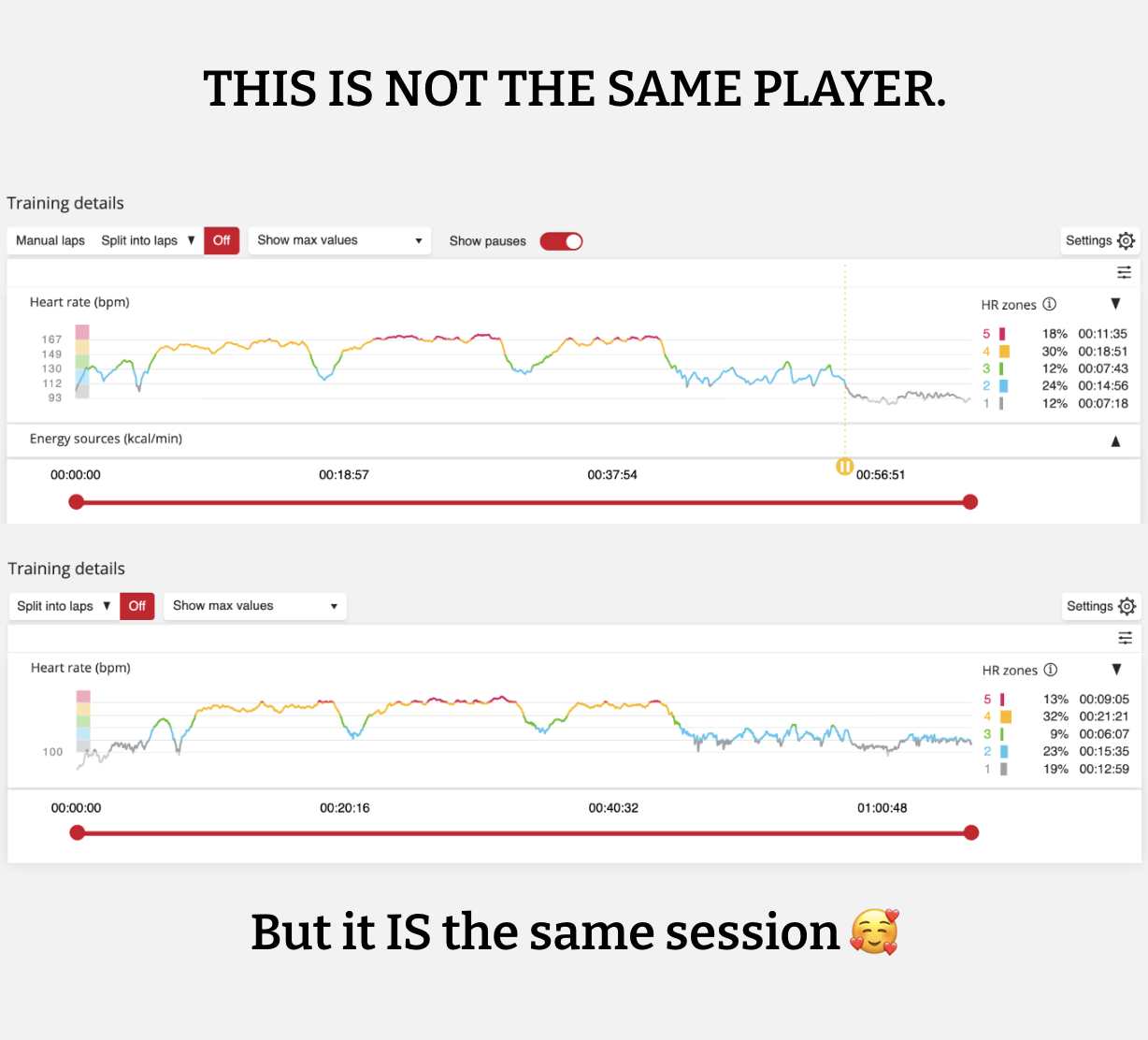
You can see in the picture above a single-session with the objective of building top-end conditioning. This was conditioned match play that created a minimum-duration and intensity requirement from both players.
Each player spent 30min above 80% HRmax in 3 separate blocks between 8-12min in length. Most of this time was spent right around the 90% HRmax line, which tells you that this was a great session to build anaerobic capacity and aerobic power. Mission accomplished 🎯💪🏆.
But here's the rub. A "killer" session doesn't mean much if it's not reflected on, analyzed, and brought into a larger picture. One session can break you down, but it takes many to build you up. And one too many of these sessions could have you tipping into injury risk, where too few could mean you're missing out.
So you need to know how to use your data BEYOND the single day. Stay tuned for the bigger picture!
Coach Derek